Case study
RORO trial search dashboard
A private allocation-research desk needed to explore a risk-on / risk-off model faster than a spreadsheet allows, without drifting from the sheet’s rules.
The situation
The live thinking lived in a heavy Excel workbook. Each iteration was adjusted by hand, and each test took about fifteen minutes per system. Parameter walks were rare because they were expensive.
-
Manual cycles
Change a setting, wait on the sheet, compare by eye.
-
~15 minutes per test
One system at a time made large studies impractical.
-
Trust vs the sheet
Any engine had to match delayed trading-trigger logic before search counted.
What success looked like
Agreement with the spreadsheet on the logic that matters, a way to search the parameter space, and a calm web desk for opening trials and charts. Not a claim that the strategy was finished.
Approach
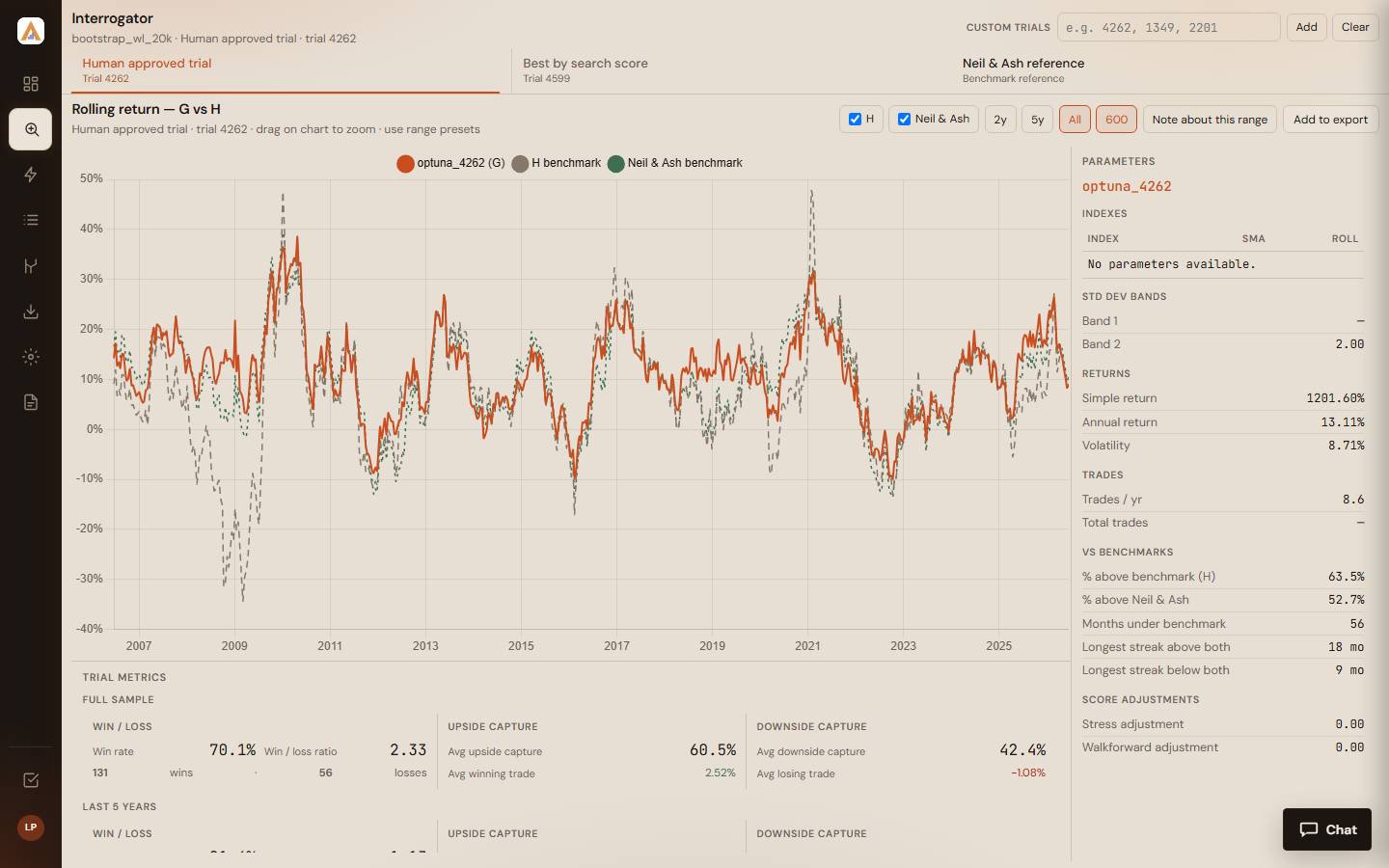
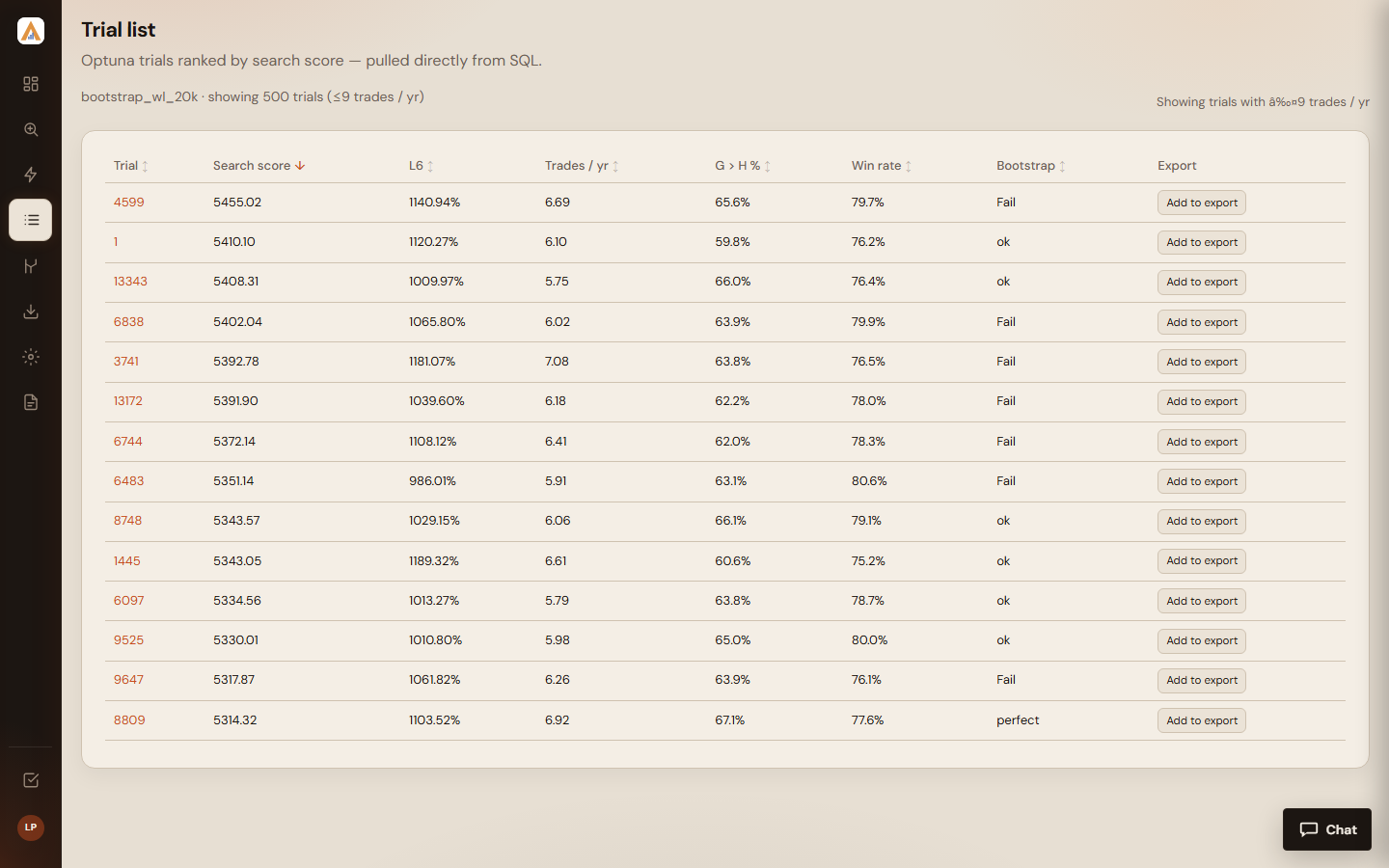
The workbook stayed the source of truth. A Rust engine was aligned to delayed trigger semantics, then wrapped with automated or batch-range search, a trial store, and a login-gated Node desk for charts and exports.
A single search takes about 1.3 seconds. With multiple cores in parallel (one test per core) wall-clock sits around 1.6 seconds when the farm is busy. On a slower virtual machine that meant roughly twelve tests at a time.
1.3s
Typical engine search
Down from ~15 minutes per manual system test.
~12×
Parallel on a slow VM
One test per core; ~1.6s under multi-core load.
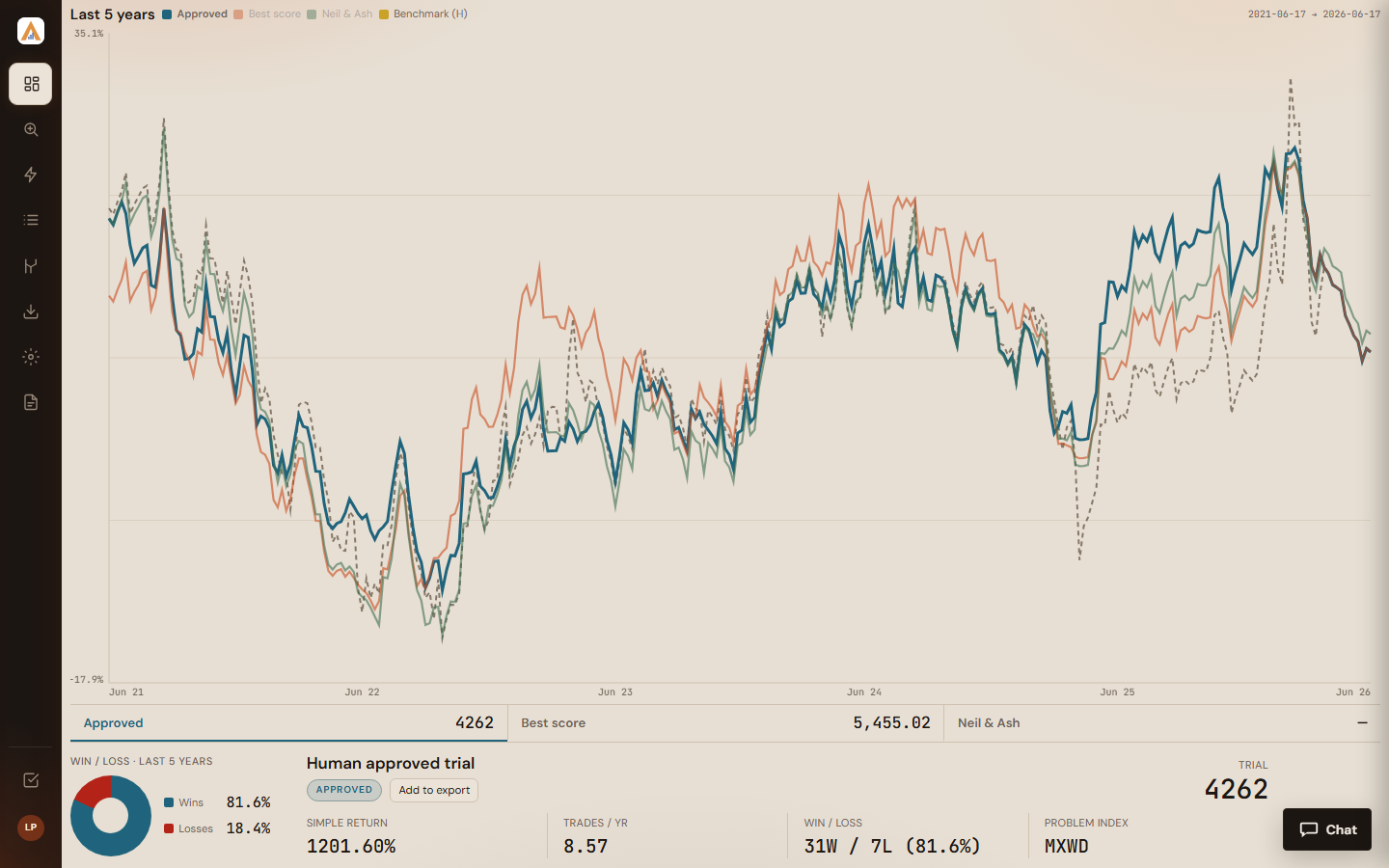
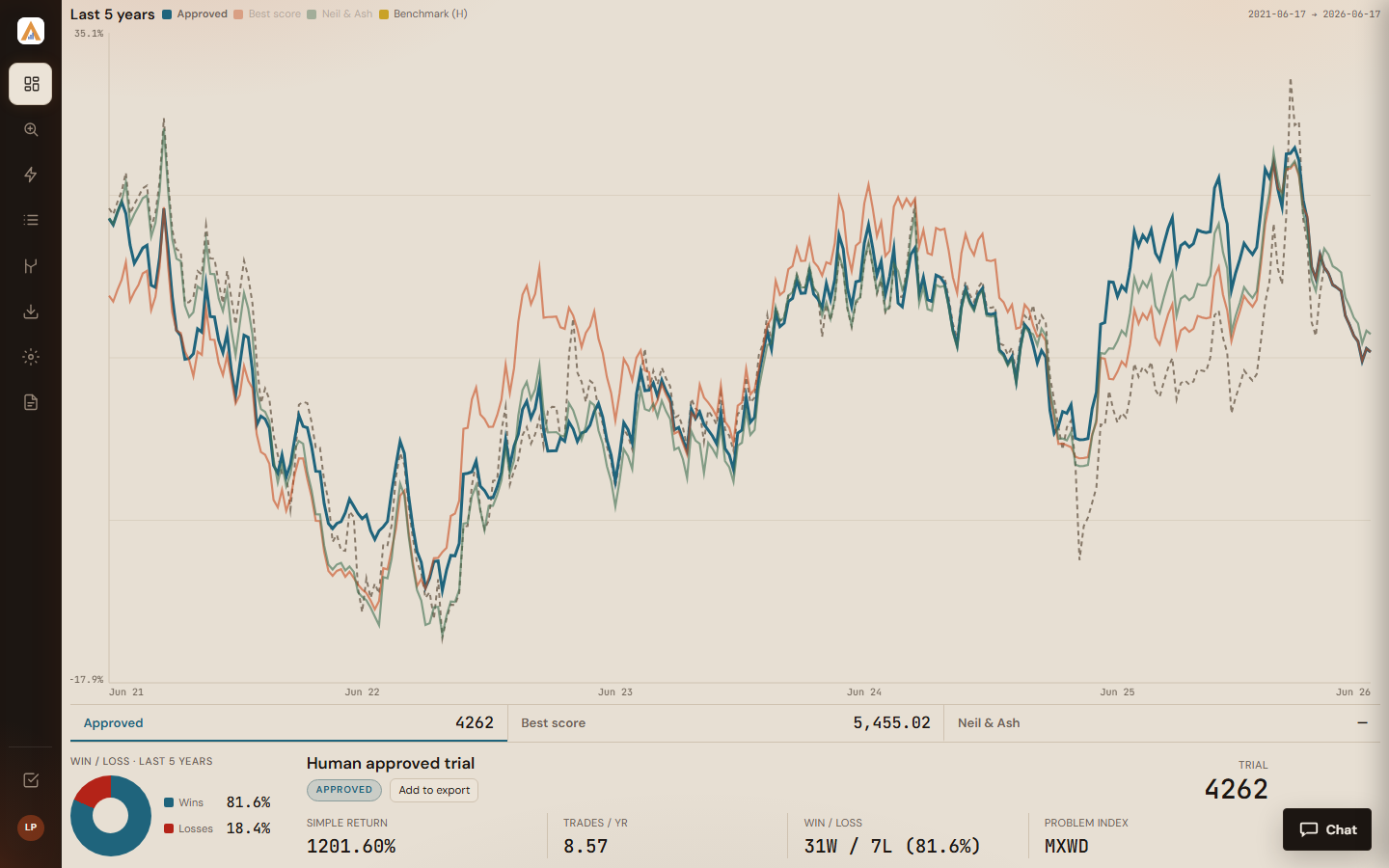
1201.60%
Approved candidate · 26y
Prior hypothetical reference ~936% · 9.32 trades/yr → 8.57 trades/yr.
Notes with the evidence
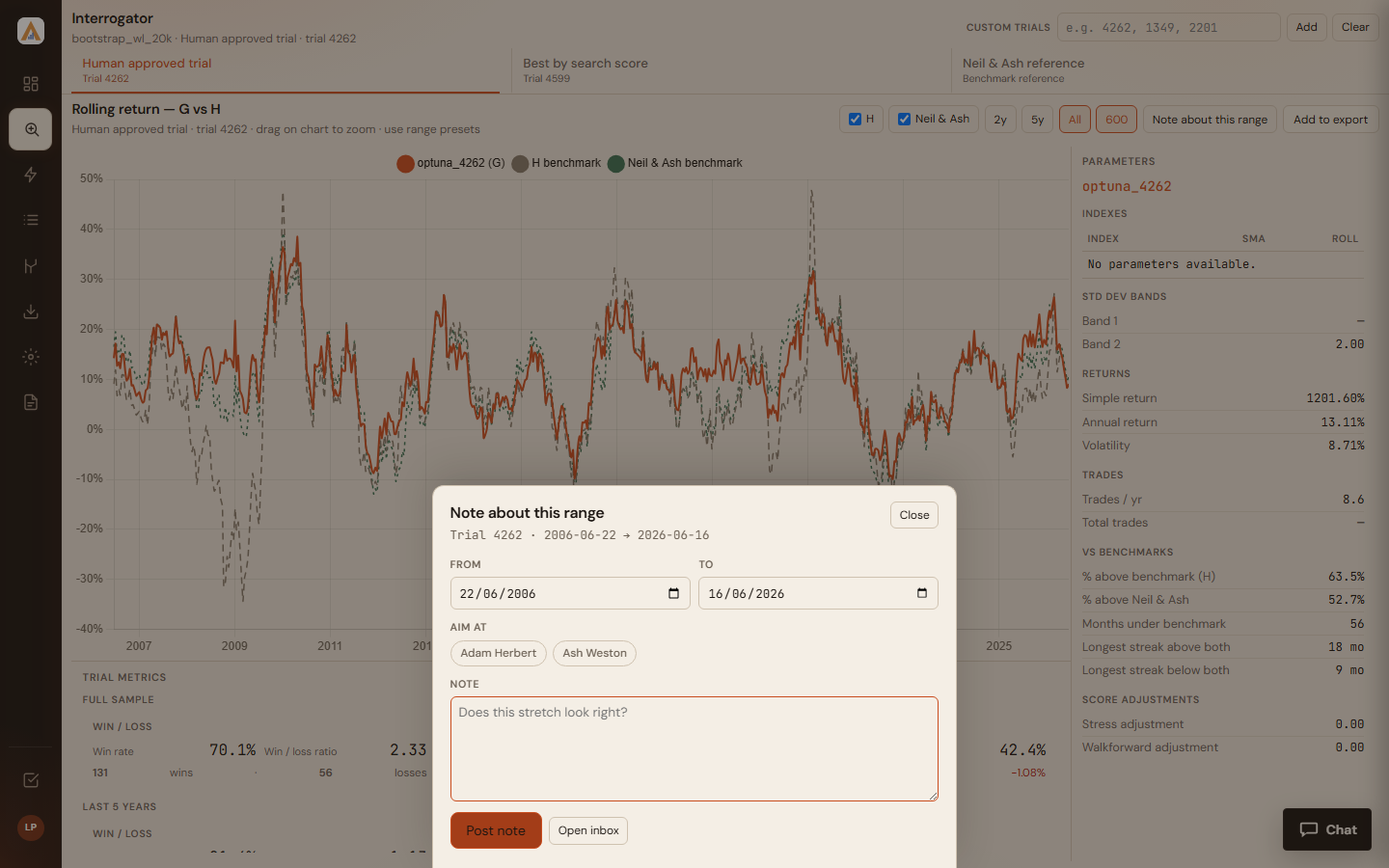
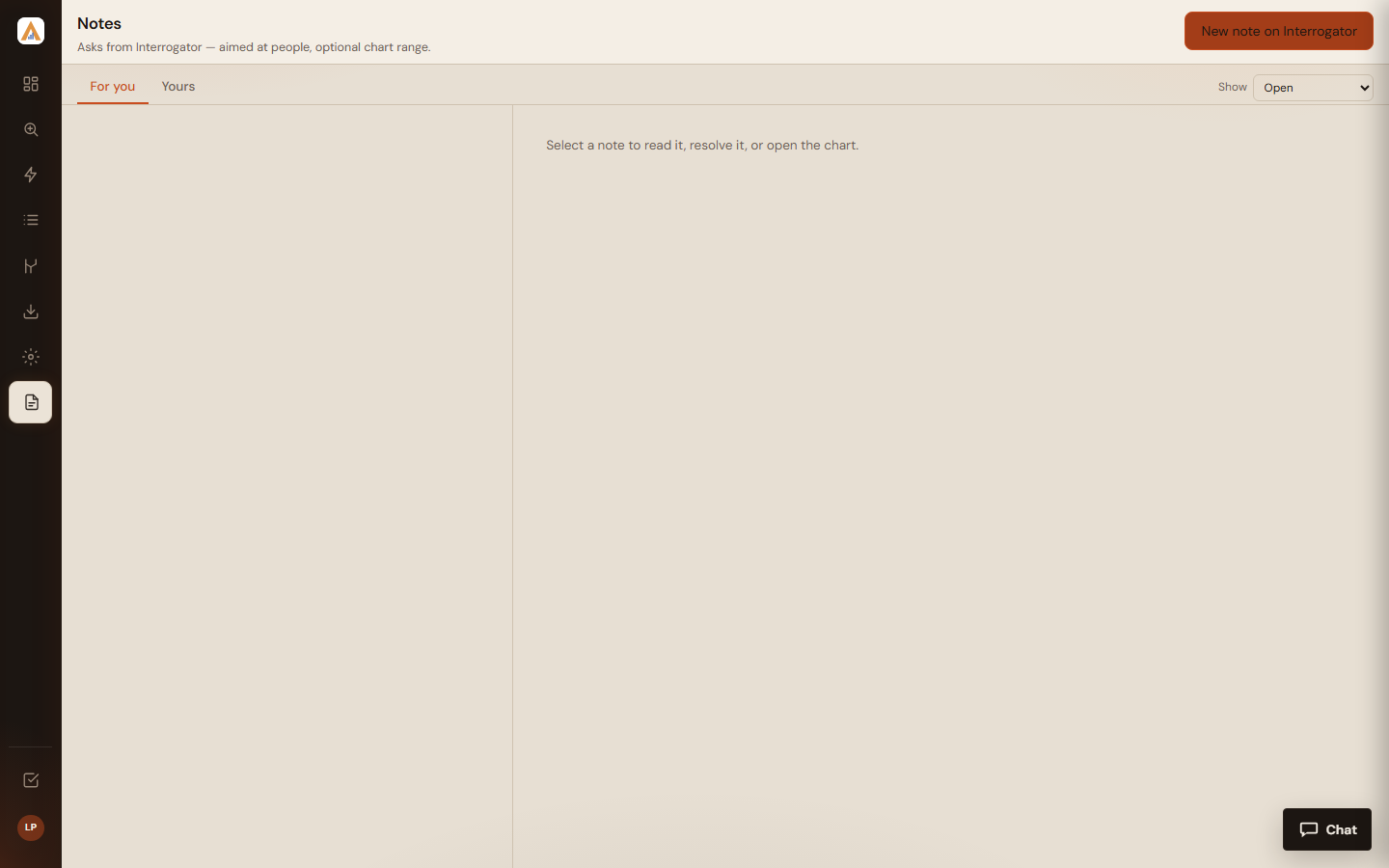
Directed notes attach to a date range on the interrogator so observations stay with the chart. The inbox lists those notes across trials for review without opening every plot first.
Delivery
Iterative: lock parity with the sheet, then search, then a hosted desk people can open. Local and production paths were documented so the same layout keeps running after hand-offs. Still being refined.
Outcomes
Large parameter studies became practical. On the desk’s 26-year backtest framing, the approved candidate sits at 1201.60% simple return with 8.57 trades per year, against a prior hypothetical reference of about 936% with 9.32 trades per year. Research outputs for that model — not a promise of live trading results.